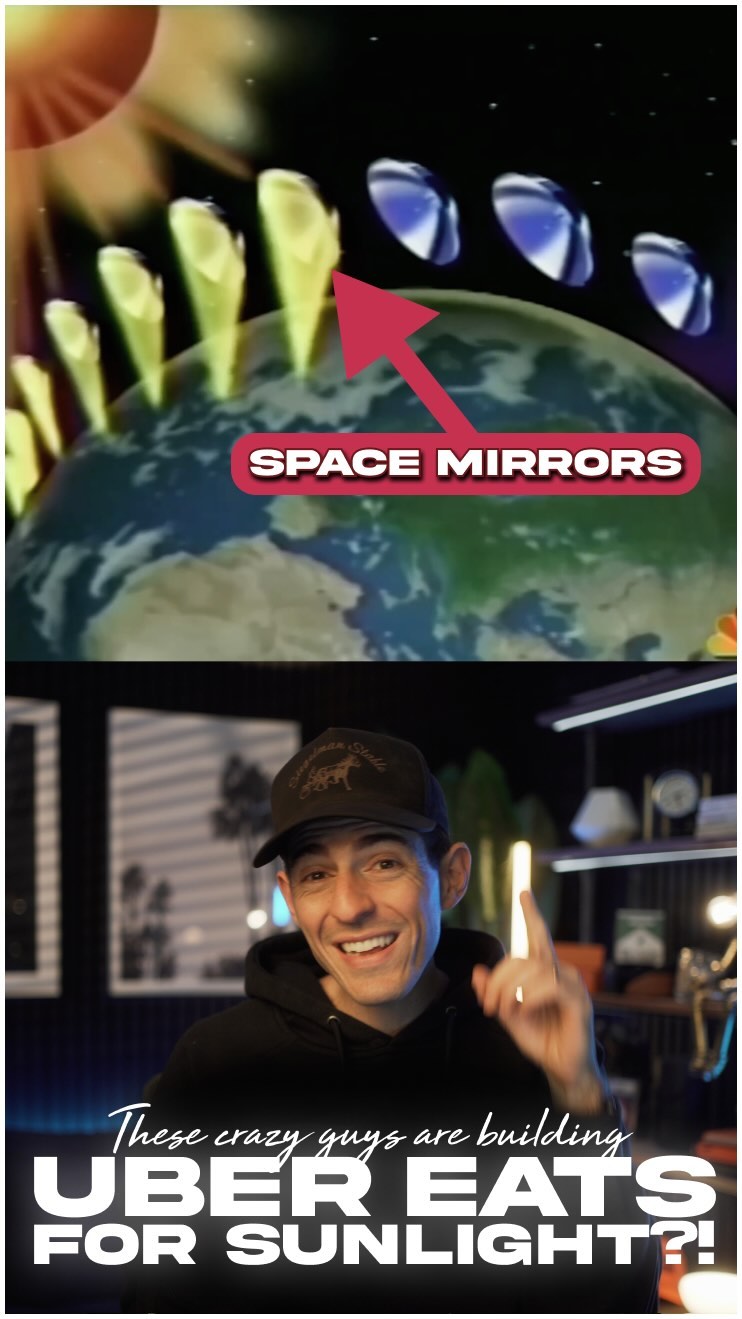
This company lets you order sunlight from an app. Wild. It’s like Uber Eats for the Sun. The company is called Reflect Orbital. These two guys figured out if they launch reflective satellites and position them in just the right constellation, at just the right angle, they can beam sunlight to any spot on Earth. Pretty nuts. The original purpose for building the company was to power solar farms at night. And it makes sense... The sun is a giant nuclear reactor that never turns off. So if you can just bounce the light from a space mirror to the dark side of the Earth, you can illuminate it. But here’s the craziest part... Reflect is starting to take customer orders starting in Q4 of 2025. So you can buy a 3 mile circle of light coverage in 4 minute chunks for anywhere in the world. Imagine lighting up all of lower Manhattan in a single tap?! As I was researching this, I couldn’t help but think how perfect this would be for the natural disasters we’ve seen in North Carolina, Georgia, and Florida with Helene/Milton. In theory, this is the perfect storm survival tool. It could help spotlight people that are stranded to aid in rescues or power up solar generators all from the sky. Reflect should be going live with this system sometime in 2025. Science rules. If you run a company and wanna learn how to tell video stories like this, I made a free 5 day series breaking down my full viral formula. Comment “viral” and I’ll DM it over #science #space #spacetech #spacex #tech #technology #ai #satellite #earth
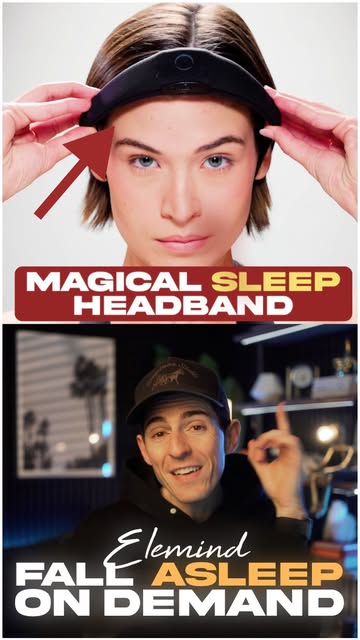
This AI headband helps you fall asleep way faster. It’s called the Elemind. And the people that use it, fall asleep way faster than normal! Elemind works using a technique called neuromodulation. It’s kind of like noise cancellation for the brain. First, it figures out the rhythm of the brain waves that keep you awake. And then, it fires pink noise at precisely the right moments to counteract them. So essentially, it’s cancelling out the brain triggers that make you stay up. And of course that means…you fall right asleep. It’s even great for going back to sleep if you get woken up in the middle of the night. But I gotta say the coolest part about this…isn’t even the sleep. It’s the potential for other use cases. Because this same technology could be used to trigger focused work. Imagine that…one click and you’re in a flow state, on demand. And the reviews for this thing are off the charts. The headband sells for $349. But the real question is…how much would you pay for guaranteed sleep? #tech #technology #ai #artificialintelligence #wellness #health #sleep
A speaker explains how a new robot spray technique makes custom running shoes in six minutes.
3.2Mviews
128Klikes
503comments
31Kshares
8.8Ksaves
448Kfollowers
57slong
4.0%liked
hookThe viewer stops scrolling because a robotic arm spraying a futuristic running shoe grabs immediate attention alongside bold text about changing running forever.
Speaker appearance. A energetic young man wearing a dark hoodie and black cap speaks directly to the camera.
Setting and lights. The speaker sits in a cozy studio while footage shows a bright robotic laboratory.
Audio setup. Fast music plays under the excited host as he talks.
Onscreen text. Bold text at the top says THIS WILL CHANGE RUNNING in bright red and white.
Broad subject. Futuristic shoes and cool technology appeal to runners and tech lovers alike.
retainThe viewer stays to see how Spider-Man inspired a robot to spray a custom shoe in just six minutes.
Core idea. A robotic arm sprays plastic thread onto a foot mold to make a running shoe fast.
Fast editing. The video cuts 37 times in 56.9 seconds, changing shots about every 1.5 seconds.
Surprising inspiration. The host explains how a Spider-Man hot glue web shooter inspired the shoe maker.
Visual proof. Video clips show early prototypes, glue tests, and runners testing the light shoes.
Good length. The story moves quickly and finishes before the topic gets boring.
rewardThe viewer walks away amazed by how fast robot tech could make custom running shoes in the future.
Learned something. The viewer learns about LightSpray technology and how shoes can be made in six minutes.
Inspired feeling. Seeing a comic book character inspire real engineering makes big ideas feel possible.
Future excitement. The idea of getting custom shoes sprayed on your feet before a race feels exciting.
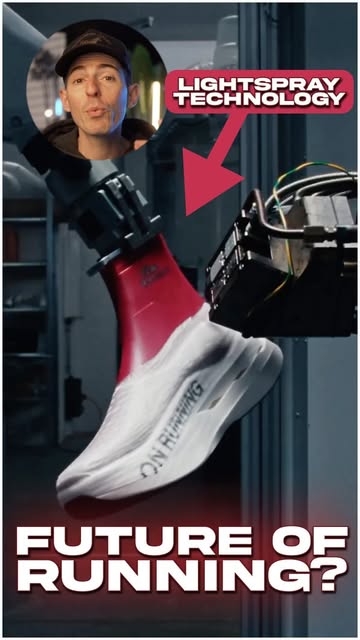
This new shoe technology could change running forever. It’s called Lightspray by @on Lightspray is a completely new approach to shoe manufacturing. It uses a robot arm to spray a continuous stream of a plasticky polymer onto a foot mold as it rotates. This allows On to create the full shoe upper in just 6 minutes (3 mins to make and 3 mins to paint). For reference, a normal shoe upper can take up to 3 hours to manufacture. But here’s what’s funny... The idea for this breakthrough innovation actually came from Spiderman. The lead designer on the project saw web shooters as part of a Halloween costume and theorized that the same tech could work for shoes. He was right. After 4 years and thousands of prototypes, On has perfected the Lightspray process and can now dial in modifications for individual customers. But here’s the craziest part... On believes that one day, runners will be able to show up to races and have their shoes custom printed on their feet the same day. And this is possible because of the hyper personalization Lightspray allows in just 6 minutes. I was blown away when I saw this. The first On shoes leveraging Lightspray are going to be available in the fall. If you like cool tech videos like this, make sure to follow along! #tech #technology #on #onrunning #sneakers #shoes #running #robotics #robot
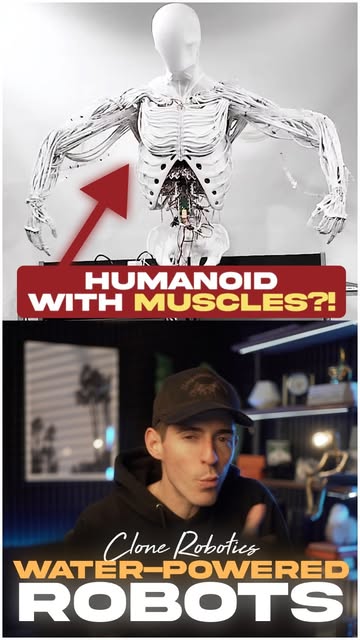
This company is building a humanoid robot with muscles?! And when you watch the demos, you’ll notice something... It doesn’t work like any of the other humanoid robots. And that’s because... …these were built with water. These are “Androids” from Clone Robotics, and they invented a Myofiber synthetic hydraulic muscle system that functions with water pumped from an artificial heart. Because of the fluid dynamics, these humanoids move more smoothly and are the most biomimetic humanoids ever built. The hand technology is the best I’ve ever seen. Clone’s Androids were in the news because they are planning to release the first 279 for their alpha test in 2025. Each will come preinstalled with a set of household skills (like washing dishes, vacuuming, and making drinks) as well as a Telekinesis platform where you can train your own. Would you have one of these in your home? #robot #robotics #ai #artificialintelligence #tech #technology #future #clone #technews
A tech creator explains Genesis, a new open-source AI tool that teaches robots real-world movement in seconds.
2.1Mviews
103Klikes
595comments
34Kshares
23Ksaves
448Kfollowers
59slong
4.8%liked
hookA bold title text and a close-up visual grab quick attention.
Visual setup. A creator wearing a cap and hoodie talks to the camera.
Bold text. Red and white text announces a major AI physics breakthrough.
Broad interest. AI tech appeals to anyone curious about future robots.
retainQuick cuts and side-by-side clips of virtual and real robots keep viewers engaged.
Pacing speed. The video cuts 30 times in 59 seconds, keeping visuals fresh.
Visual evidence. Real robot dogs flipping are shown alongside virtual models.
Simple analogies. Comparing AI robot training to Iron Man makes it easy to follow.
rewardViewers learn about an open-source AI tool accelerating robotics.
New knowledge. Viewers discover a free AI physics model called Genesis.
Tech excitement. Seeing real robots learn skills instantly inspires curiosity.
Clear summary. Complex physics training is made simple and easy to digest.
kallawayai physics breakthroughgenesis airobot trainingartificial intelligencetech newsopen source airobotics simulationiron man techfuture technologyfast ai model
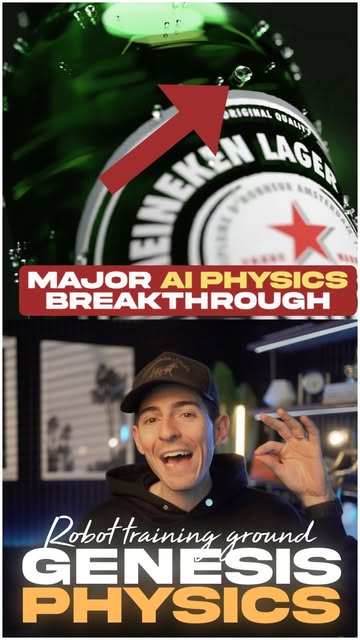
This AI physics model can train robots 436,000x faster than normal 😳 It’s called Genesis. Genesis is an opensource project aimed to create a real world physics model. The model will allow for much faster training between virtual and real worlds. For example, if you could simulate a robot doing a backflip in the virtual Genesis model, you could then “download” that backflip skill to a 1:1 replica robot in the real world and the skill would work because the physics matched in the virtual environment. I’ll be honest, I don’t exactly know the full implications for this other than this model enables 430,000x simulation speeds and can transfer learned skills as quickly as 26 seconds. Sounds pretty fast! To me, this means all hardware and robots will have a digital twin in virtual space that are training grounds for learning. The speed of transfer was what blew me away…you could train the robot on a chore in the virtual world, press download, get a snack, and it’d be doing it 3 mins later. If you’re trying to stay ahead of the curve in the AI age, make sure to follow @kallaway and @kallawaytech #ai #artificialintelligence #tech #technology #robot #robotics #generativeai #newtech #physics
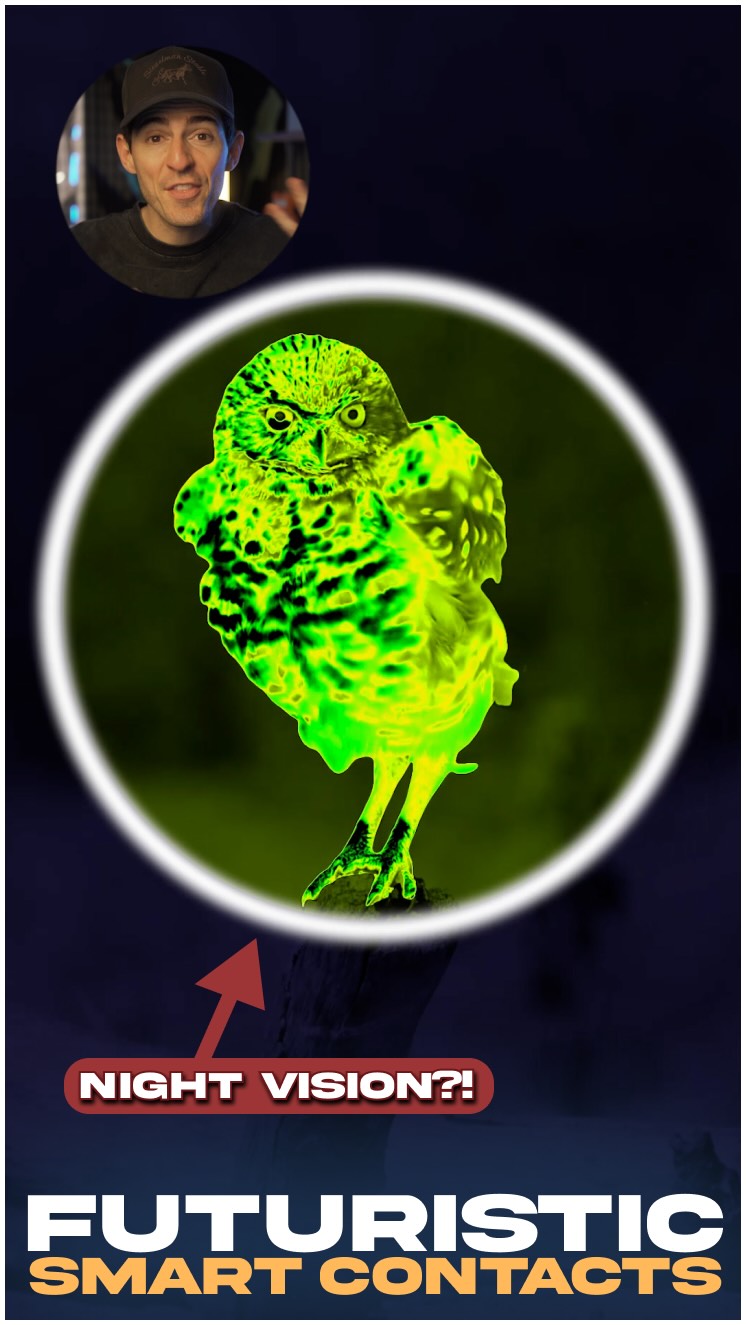
These are futuristic contact lenses that let you see in the dark. They’re like night vision goggles, without needing the goggles. And it gets even crazier… Because these lenses let you see even when your eyes are completely closed. It’s pretty insane. Now this was a massive breakthrough by a research lab in China. And the way it all works is super interesting. The contacts are coated with special nanoparticles that absorb infrared light. That’s the part of the spectrum our human eyes can’t see. But here’s the big innovation… Those nanoparticles can then convert that invisible light into visible waves that we can see. Essentially, letting us see in the dark. Now the contacts are clear so you can still see normally, but you also have this super secret power to read hidden messages. And here’s where it gets even crazier… The people that tried these said it was even easier to read secret messages when their eyes were closed. So in theory, someone could transmit an invisible message, and as long as you were facing in their direction, even with your eyes closed, you could read it. The Chinese lab said the first version of these will only cost $200. And I don’t know about you, but I could see these being everywhere. Follow @kallaway for more videos like this. #ai #artificialintelligence #tech #technology #wearables #china #eyewear #contacts #futuretech #newtech
This company lets you order sunlight from an app. It’s like Uber Eats for the Sun. The company is called Reflect Orbital. These two guys figured out if they launch reflective satellites and position them in just the right constellation, at just the right angle, they can beam sunlight to any spot on Earth. Pretty nuts. The original purpose for building the company was to power solar farms at night. And it makes sense... The sun is a giant nuclear reactor that never turns off. So if you can just bounce the light from a space mirror to the dark side of the Earth, you can illuminate it. But here’s the craziest part... Reflect is starting to take customer orders starting in Q4 of 2025. So you can buy a 3 mile circle of light coverage in 4 minute chunks for anywhere in the world. Imagine lighting up all of lower Manhattan in a single tap?! As I was researching this, I couldn’t help but think how perfect this would be for the natural disasters we’ve seen in North Carolina, Georgia, and Florida with Helene/Milton. In theory, this is the perfect storm survival tool. It could help spotlight people that are stranded to aid in rescues or power up solar generators all from the sky. Reflect should be going live with this system sometime in 2025. Science rules. Update: This is one of the classics I posted in 2025. They just raised $20M in funding to fully build this out! Follow @kallaway for more videos like this! #science #space #spacetech #spacex #tech #technology #ai #satellite #earth
Kallaway explains how solar tower power plants use giant mirrors and molten salt to store energy and generate electricity day and night.
1.1Mviews
41Klikes
316comments
5.7Kshares
3.4Ksaves
448Kfollowers
54slong
3.7%liked
hookThe video instantly grabs attention by showing an impressive aerial shot of a futuristic solar farm and claiming its panels are not what they seem.
Speaker look. A young man wearing a black hoodie and a baseball cap points up while talking directly to the camera.
Setting and light. High contrast studio lighting frames the creator in front of dim shelves, paired with bright, clear aerial footage of desert solar plants.
Original audio. Clear, energetic voiceover over subtle background music builds excitement right away.
Onscreen text. Bold yellow and red text highlights key phrases like future of solar farms to quickly grab eyes.
Broad appeal. Renewable energy and cool futuristic tech appeal to almost anyone curious about how the world works.
retainPacing stays extremely fast while breaking down a surprising technological process step by step.
Surprising idea. The reveal that the solar farm uses salt and mirrors instead of solar panels keeps viewers curious.
Visual proof. Diagrams, animations, and real footage clearly show how sunlight heats the salt into liquid form.
High energy. The creator speaks with enthusiastic facial expressions and lively hand gestures.
Fast cuts. The video moves quickly with 40 shots in 54.2 seconds, changing clips every 1.4 seconds on average.
Useful diagrams. 3D animations of turbines and steam systems make a complex topic very simple to understand.
Clear story line. The narrative flows cleanly from the problem to the solution and explains how power is made at night.
Ideal length. Under one minute is the perfect amount of time to explain this cool scientific concept without dragging.
rewardViewers learn an exciting detail about modern clean energy technology in less than a minute.
Taught something. Viewers learn how molten salt stores heat to generate electricity even when the sun goes down.
Inspired feeling. Seeing clever technology gives people hope for the future of clean energy.
Amazed reaction. Learning that common salt can hold heat at 1,000 degrees Fahrenheit feels like magic.
This might be the future of solar energy…all without using a single solar panel. From the sky, its configuration looks like some kind of ancient symbol. Thousands of panels aimed around a giant central tower. But the crazy part about these farm is that those aren’t actual solar panels. They’re giant rotating mirrors, all synchronously reflecting the light towards the top of the central tower. Now the way this works is super interesting… Because the tower isn’t a giant solar panel either...it’s actually full of salt. When the light hits the tower, it heats up the salt to 1,000 degrees Fahrenheit. And this creates molten salt in liquid form. They use salt because it’s the best mineral at storing heat as a liquid. And they can use that hot liquid to turn water into steam, spin a turbine and create power. And this is a big deal because it means this solar farm can create new power at night, even when the sun is down. It’s possible that this could be the future of solar energy…all without using a single solar panel. Follow @kallaway for more videos like this. #ai #artificialintelligence #tech #technology #solar #solarenergy #sustainability #environment #earth #newtech
These hidden easter eggs are super rare in the tech world. They’re called silicon doodles. Each one is a tiny graphic that was secretly etched into an old computer chip from the 1980s. And here’s why they’re so rare… These drawings are smaller than a spec of dust. It takes a high-powered microscope just to be able to find them on the chip. But here’s the craziest part of the whole story… The reason they exist in the first is because back in the day chipmakers used them as a legal defense in court to prove when competitors copied their designs. It was like a watermark that nobody knew was there. So if a cloned chip had the doodle on it, the original creator could prove the designs were stolen. Pretty interesting. Now today, collectors all over the world are on a treasure hunt to find the silicon doodles before all the old chips are recycled or destroyed. There’s even a community and site called Silicon Zoo where fans share and post the best ones they find. Follow @kallaway for more videos like this! #ai #artificialintelligence #tech #technology #siliconvalley #collectibles #future #newtech
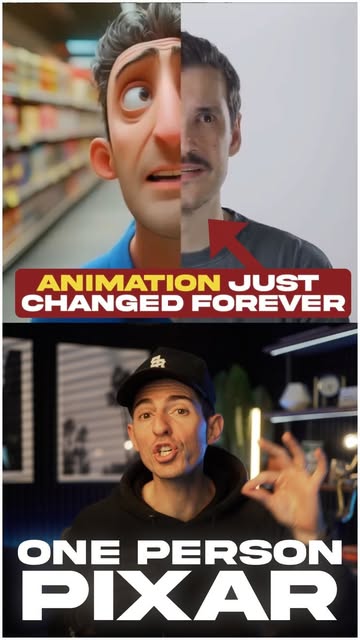
Animated content just took another leap forward. These demos keep getting crazier and crazier. This is called Act-One from Runway ML. If you make content and are at all interested in AI, Runway is a company you should be tracking. Act One lets humans generated expressive character tracking and voice overs at the same time. In essence, you can make a one-man Pixar. With a single human driving video, you can generate unlimited versions of characters. The beauty of this is that in addition to the voice sync and lips matching, the facial expressions are a carbon copy of the original driving video. It’s like Memoji’s but on Level 100. To me, this means that a single person with a few AI credits and a big imagine will be able to dream up entire cinematic universes from the bedroom. Most creatives think this will replace them. I don’t think so...what this is does is enable expert animators to create 100x more projects in a year, abstracting away the tedious. The ones who are in trouble are the studios...because creators can start and finish projects all on their own without any gatekeeper. Runway is working to put Hollywood in every creator’s pocket on the planet. Remember, if you run a tech company and want help telling video stories like this, comment “viral” and I’ll send you my full content cheat sheet. #tech #ai #artificialintelligence #video #animation #filmmaker #pixar #technology #creator