@jonathanhaidt Jonathan Haidt · 13 Aug 2026
30.9x outlierThis video shows kids doing risky outdoor play while a funny standup audio clip talks about how kids do not break bones anymore.
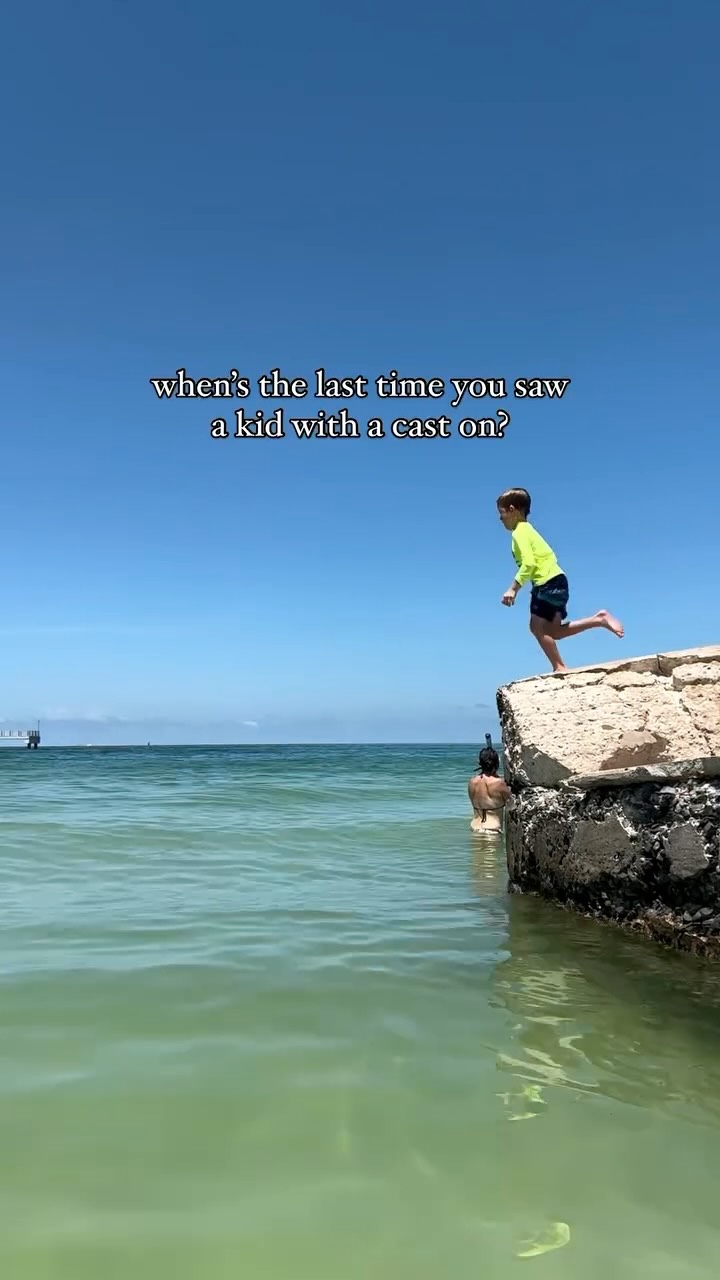
hookA boy jumping off a ledge into the sea with bold text on screen instantly stops the scroll.
- Sunny backdrop. A boy in bright shorts jumps off a stone ledge into deep green ocean water.
- Clear text. White text asks when you last saw a kid with a cast on.
- Comedic voice. A comedian speaks with a lively tone about childhood injuries.
- Broad appeal. Parenting and childhood memories appeal to almost every adult viewer.
retainFast video cuts of kids doing brave stunts keep the viewer watching until the final joke.
- Funny contrast. The visual scenes show kids climbing high trees and riding bikes with no hands while the voice talks about safe modern kids.
- Fast pacing. The clip uses 9 shots in 27.6 seconds, giving a new shot about every 3.1 seconds.
- Exciting action. Children slide down huge inflatables, skate down bowls, and balance on fallen trees.
- Witty joke. The comedy ends with a sharp joke about how nobody can sign a cast for anxiety.
rewardViewers get a laugh and a gentle reminder about the value of outdoor play for children.
- Laughter. The standup comedy voiceover makes people smile.
- Nostalgia. Adults remember getting casts and playing wild games when they were young.
- Parenting idea. It inspires parents to let their children explore and take small physical risks.
To grow up, kids *need* risky play. They need to push their own boundaries. If they are always doing safe things, they aren’t growing. Whether biking before they are fully stable, skating down a flight of stairs, climbing trees — kids need to explore the physical world in a way that expands their own definition of safety and comfort. Some of these self-led adventures will make a parent gasp. Yet if a child feels up to it, it’s generally a great thing for them to do. (And yes, wear helmets when biking, we are exploring boundaries, not being reckless.) Kids also need to push their emotional and psychological boundaries. If it’s outside: going to a nearby store on their own, walking to a friend’s house, biking around with friends if the neighborhood allows it. If it’s indoors: making cookies or completing a task on their own, without parents offering help or supervising (just being reachable for questions). This is how kids develop independence, responsibility, and a sense of comfort in the physical world. Since the 90s, #safetyism has become a prevailing parenting philosophy. The goal to eliminate any and all risk has resulted in teens engaging in far fewer risky behaviors than previous generations. Embracing a culture of safetyism has interfered with young people’s social, emotional, and intellectual development. More on this in #theanxiousgeneration, and in my previous book, The Coddling of the American Mind. My thanks to comedian @andrewsleighter for this great bit and to @ravennkramer for the video!
watch on instagram