A man shares nineteen simple words that help leaders give feedback people actually want to hear.
16Mviews
418Klikes
1.5Kcomments
4.4Kshares
278Ksaves
2.8Mfollowers
32slong
2.7%liked
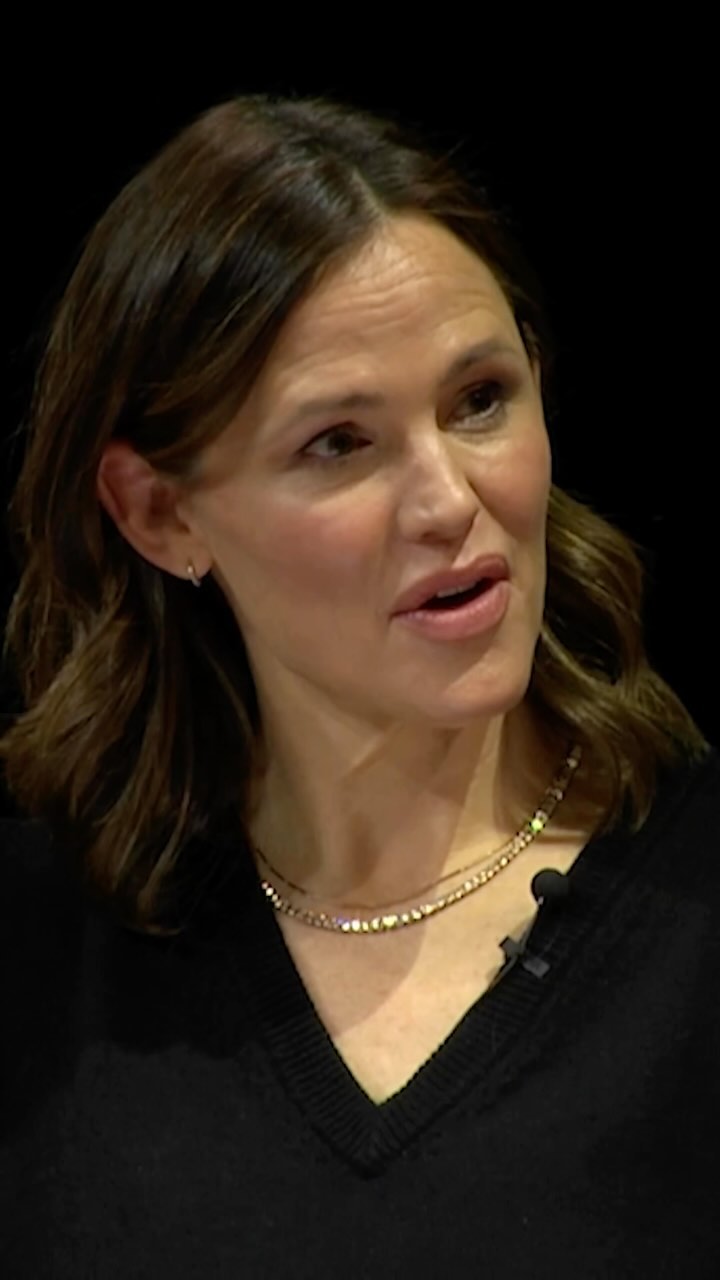
hookA famous actress asks a question about mentoring that instantly grabs the attention of anyone who works with others.
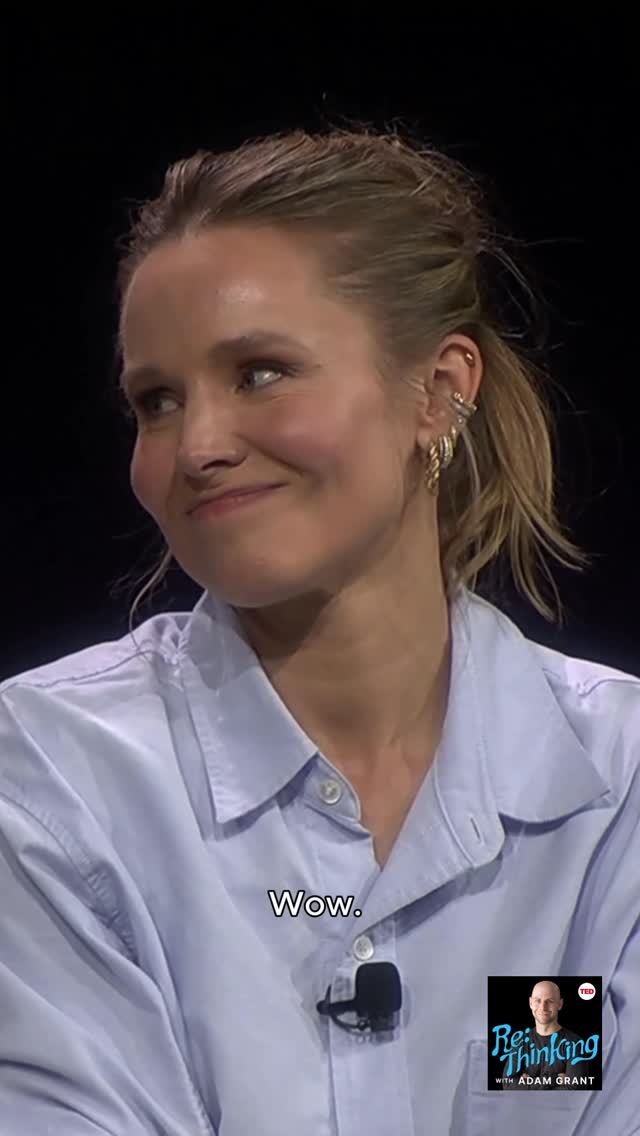
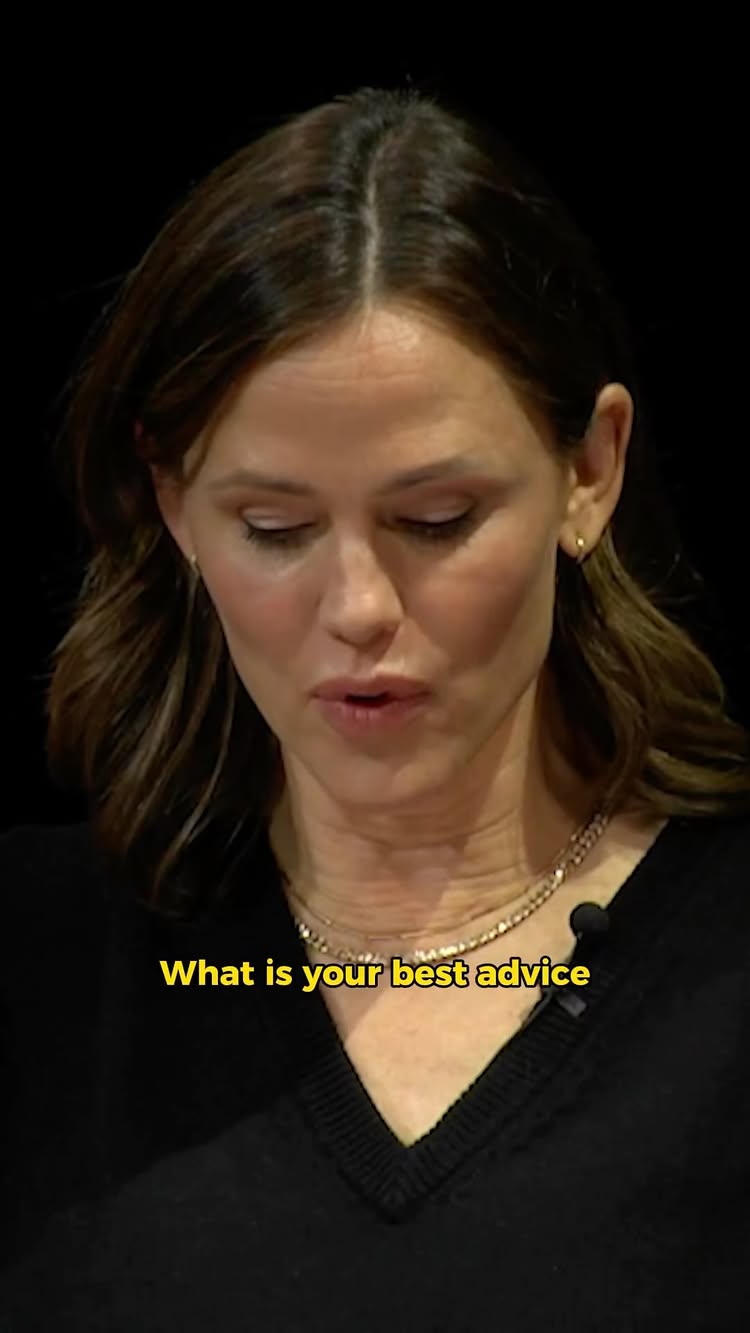
Woman on stage. A woman in a dark sweater looks thoughtful under bright stage lights.
Simple stage setting. The dark background keeps all attention on the speaker.
Clear spoken audio. She speaks clearly about helping younger team members.
Yellow subtitles. Bold yellow words at the bottom make it easy to follow along.
Broad appeal. Anyone who manages, teaches, or works on a team wants to hear the answer.
retainThe quick tip is so useful that the actress immediately writes it down on her notepad.
Useful advice. The speaker reveals a short sentence that makes people open to feedback.
Real emotion. The woman laughs with joy and starts writing down the advice immediately.
Essential notepad. Her pen and paper show how valuable the tip really is.
Pacing and edits. There are 5 shots in 32.3 seconds, changing pictures right when the conversation shifts.
Clear story flow. A question is asked, a clear answer is given, and the listener takes notes.
rewardViewers learn an exact script they can use to coach colleagues without making them feel attacked.
Taught a trick. Viewers learn nineteen exact words to set high expectations kindly.
Inspired to lead. The video makes viewers feel ready to help others grow.
Reminded of good habits. It shows that setting clear intentions upfront builds trust fast.
adam grantjennifer garnerleadership tipsmentoring advicegiving feedbackcareer growthmanagement skillsworkplace advicecommunication skillspublic speakingpodcast cliptough love
When you give tough love, how do you highlight that you’re doing it because you care? This event with @jennifer.garner was one of my favorites ever—filled with surprise and delight. Podcast link in bio: we talk parenting and mentoring, acting and aging, hidden potential, and what our dream school would look like
Adam Grant and Trevor Noah discuss why chasing happiness directly often fails and how happiness happens as a side effect of living well.
5Mviews
197Klikes
653comments
0shares
0saves
2.8Mfollowers
56slong
4.0%liked
hookA clear question about changing your mind grabs the viewer immediately.
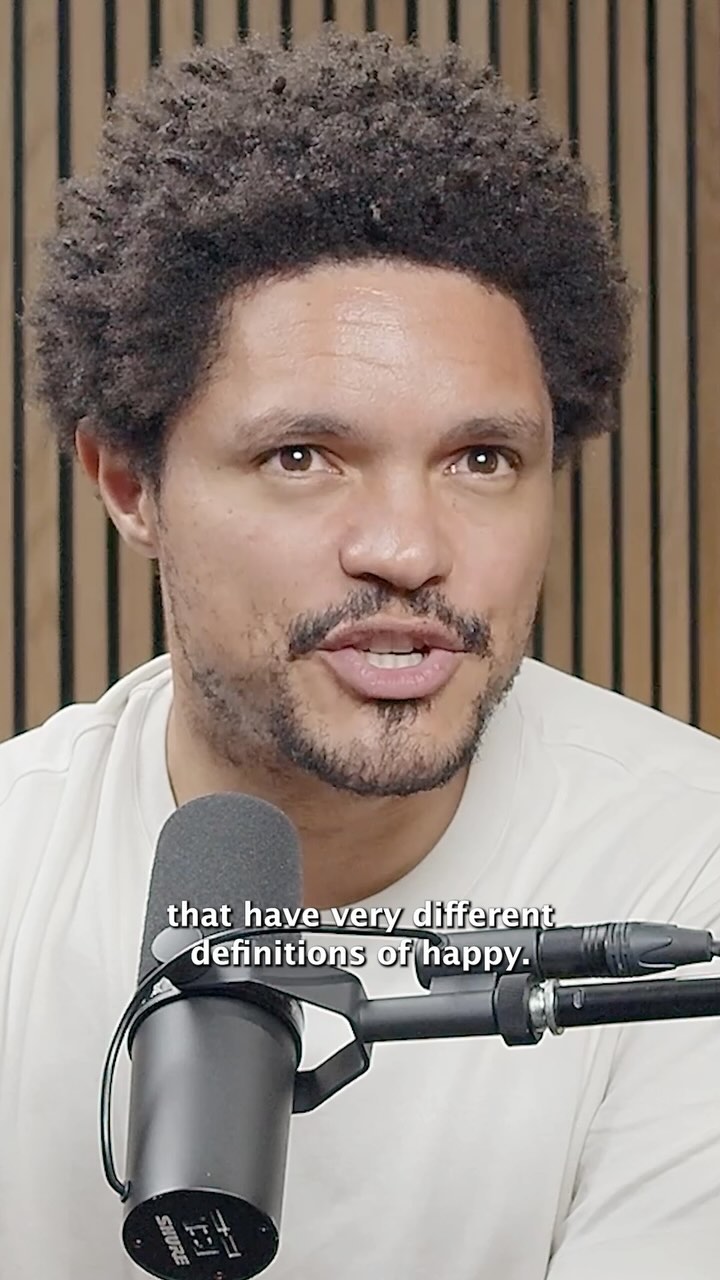
Speaker face. A smiling man speaks directly into a podcast microphone.
Clean setting. Warm wood panels sit behind him in a bright studio.
Clear captions. Bold white text shows the opening question at the bottom.
Broad appeal. Most people care about happiness and changing their mind.
retainA warm and thoughtful chat keeps viewers watching until the final point.
Deep topic. Learning that happiness is a result rather than a goal feels fresh and helpful.
Calm mood. Both men speak softly and listen to each other with care.
Shot pacing. There are 12 shots in 56.4 seconds, shifting view about every 4.7 seconds.
Simple props. Studio microphones and a coffee mug sit between the speakers.
Easy flow. One person asks a question, the guest gives world examples, and the host ties it together.
Right length. The video shares a complete thought in under one minute.
rewardViewers learn a new way to view happiness without feeling pressure to chase it.
New perspective. You see happiness as something that happens while doing other meaningful things.
Feeling understood. Anyone stressed about finding happiness feels relieved.
Calm feeling. The quiet tone leaves you feeling peaceful and relaxed.
adam granttrevor noahpodcasthappinesslife adviceself improvementmind shiftconversationphilosophymental healthwellbeingpodcast clippsychologydeep talkmotivation
Being obsessed with happiness can make us unhappy. Part 2 with @trevornoah is live now—podcast link in bio. Along with happiness, we talk about communicating clearly and the power of context. Trevor also does a few impressions… including one of me 😬 😆
Actress Kristen Bell explains why dealing with annoying family members helps us stay connected to a community.
4.6Mviews
159Klikes
2.1Kcomments
52Kshares
33Ksaves
2.8Mfollowers
57slong
3.5%liked
hookViewers stop scrolling because a famous actress shares a funny truth about dealing with annoying people.
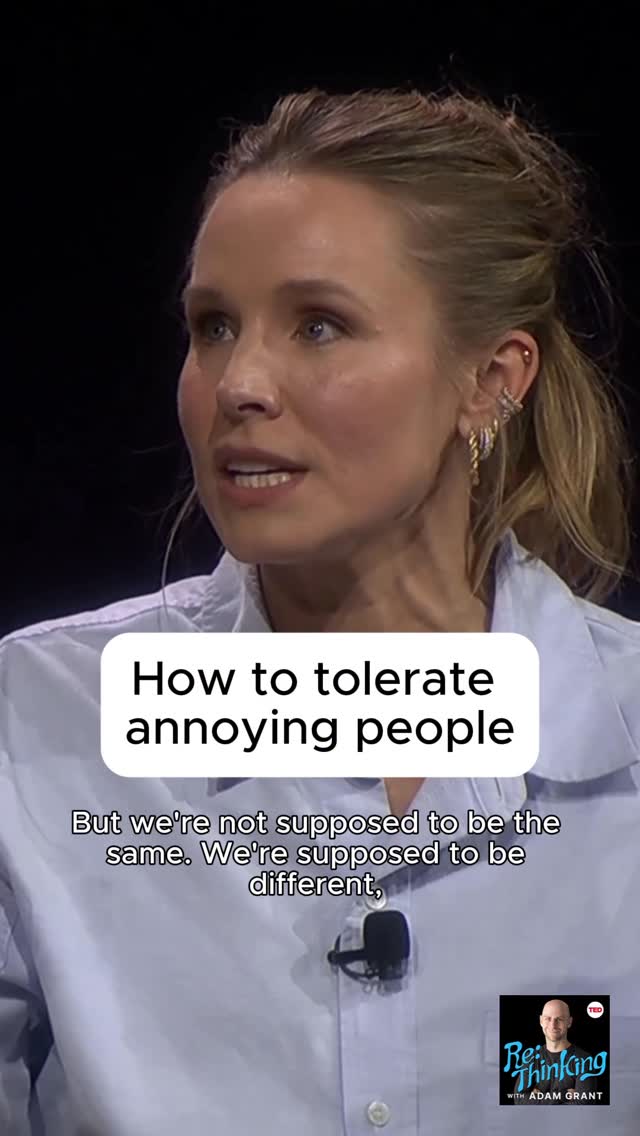
Famous face. Kristen Bell sits under bright stage lights talking on a stage.
Bold text. Big white text asks how to tolerate annoying people.
Big audience. Almost everyone has an annoying relative or coworker they struggle to handle.
retainViewers keep watching because Kristen Bell tells a hilarious and relatable story about a fake uncle.
Funny story. She uses a funny example named Uncle Randy to make her point clear.
Great acting. Her expressive face and funny tone make the message feel very real and lighthearted.
Regular edits. The video uses 9 shots in 56.9 seconds, moving to a new shot about every 6.3 seconds.
Easy message. The story is simple to follow and teaches a gentle lesson about patience.
rewardViewers leave with a fresh and funny way to view annoying people in their lives.
New view. Viewers learn that annoyance is just the price we pay for community.
More patience. People feel encouraged to give lonely relatives a bit more grace.
Good laughs. The funny jokes about Uncle Randy bring quick entertainment and joy.
adam grantkristen bellrethinking podcastuplift betterupcommunity tipsdealing with familyannoying peoplemental healthrelationshipslife advicepodcast clipfunny interview
@kristenanniebell dropping wisdom on how a life without irritation is a life without connection. For our full conversation, Re:Thinking podcast link in bio
An expert explains why the person who talks the most in a meeting often gets picked as the leader even if they are bad at the job.
4.2Mviews
134Klikes
1Kcomments
0shares
0saves
2.8Mfollowers
34slong
3.2%liked
hookA speaker introduces a surprising rule about who gets picked as a team leader.
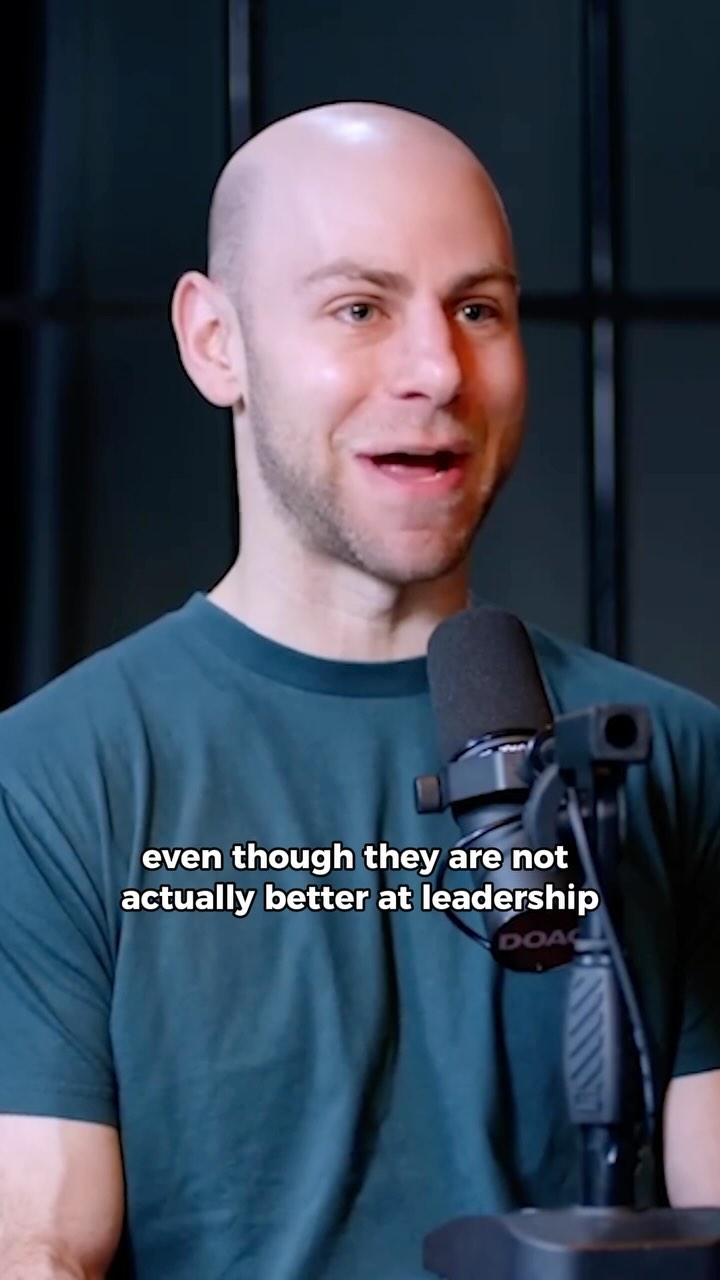
Clear face. A bald man smiles warmly while sitting in front of a dark studio background with a microphone.
Text style. Bold white captions appear cleanly near the bottom of the screen.
Opening line. He names a scientific term that sounds unusual and catches attention right away.
Broad topic. Anyone who works in a team or attends meetings can relate to this idea.
retainThe speaker breaks down why confidence is often mistaken for real skill.
Surprising truth. He explains why loud talkers fail to make the people around them smarter.
Pacing speed. The video is one unbroken take with no cuts over thirty three seconds.
Calm delivery. He speaks with a gentle tone that makes deep research easy to understand.
Podcast setup. A studio microphone shows this clip comes from a longer professional conversation.
Clear structure. He moves smoothly from defining the rule to showing why it hurts teams.
rewardViewers learn why talkative people get promoted and how to spot better leaders.
New knowledge. Viewers learn the name for why loud talkers take over team discussions.
Validation. Quiet workers feel recognized when they learn that confidence is not real competence.
Smarter habits. People are inspired to listen to quiet voices in their next team meeting.
adam grantleadership tipsbabble effectmeeting adviceworkplace psychologyconfidence vs competenceteam managementpodcast clipworkplace cultureprofessional growthquiet leaders
What do you look for in a leader? It’s time to stop promoting the people who command the most airtime and start elevating the ones with the most expertise. For more, listen to my conversation with @steven and check out ch8 of Hidden Potential
Two experts talk about research showing that having children does not make parents happier in their daily lives.
4.1Mviews
67Klikes
3.4Kcomments
0shares
0saves
2.8Mfollowers
47slong
1.6%liked
hookA bold question about parenting makes viewers stop scrolling to see what the research shows.
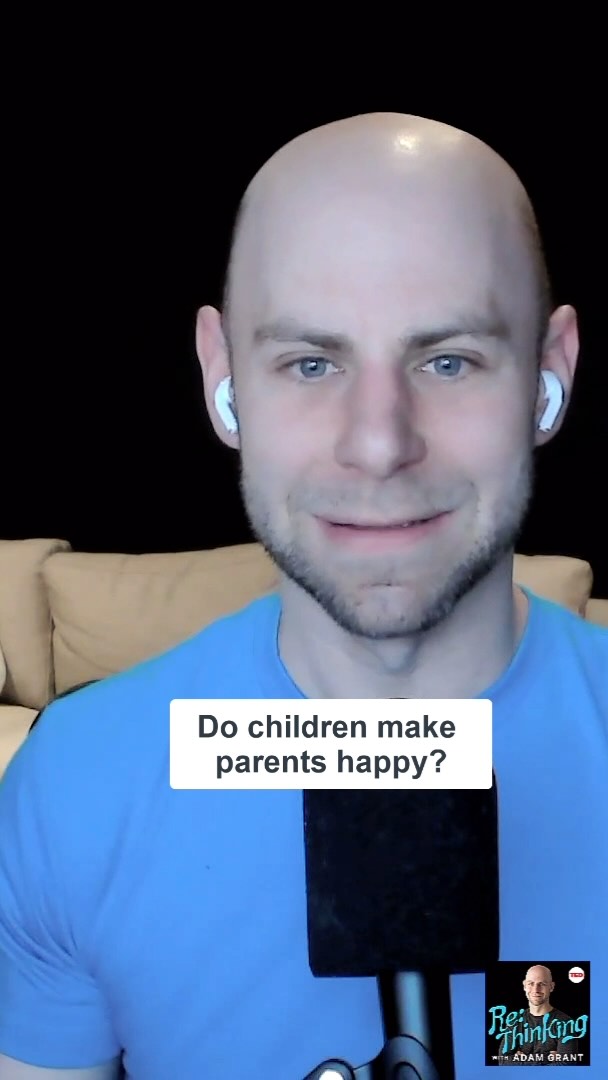
Bold start. A bald man looks at the camera while speaking clearly into a dark microphone.
Simple setting. The speaker sits in front of a simple couch with soft room light.
Clear voice. Clear speech asks a big question right away without background music.
Big text. Bright white captions at the bottom show the big question about parent happiness.
Broad topic. Parenting and joy affect millions of families who care about happiness.
retainA surprising answer about parenting data keeps viewers engaged until the end.
Surprising facts. The speaker jokes that happiness increases when kids leave home, which sparks curiosity.
Real emotion. Both speakers smile and laugh together while sharing real science facts.
Paced cuts. The video has 7 shots in 47.2 seconds, cutting about every 6.7 seconds between speakers.
Minimal props. Microphones and split screens keep the focus entirely on the discussion.
Easy story. The video starts with a question, delivers a funny joke, and explains the research.
Right length. A short length under fifty seconds covers the main point without wasting time.
rewardViewers learn a clear research fact about children and daily parent happiness.
Taught something. Viewers learn that studies show kids have a slight negative effect on daily parent joy.
Feels amused. The funny joke about kids moving away gives people a good laugh.
Made curious. Viewers want to think about the difference between happiness and meaning in life.
adam grantpodcast interviewparenting factschildren and happinesspsychology researchfamily lifescience datarelationship tipshealth advicepersonal growthfull episodequote clip
Having kids is a better source of meaning than happiness. Psychologist Dan Gilbert and I discuss the evidence, which is extensive and rigorous—podcast link in bio
When people lack power and status, it’s easy for them to be silenced. What’s your favorite way to make sure their voices are heard? So fun discussing with @joannacoles @brilliantmindssthlm
Do you see changing your mind as a sign of weakness or growth? It depends on whether you base your identity on your beliefs or your values. Enjoyed discussing with @steven. For more, see chapter 3 of Think Again
Adam Grant explains why learning styles are a myth and how trying hard ways to learn actually helps you more.
2.2Mviews
76Klikes
897comments
0shares
0saves
2.8Mfollowers
30slong
3.5%liked
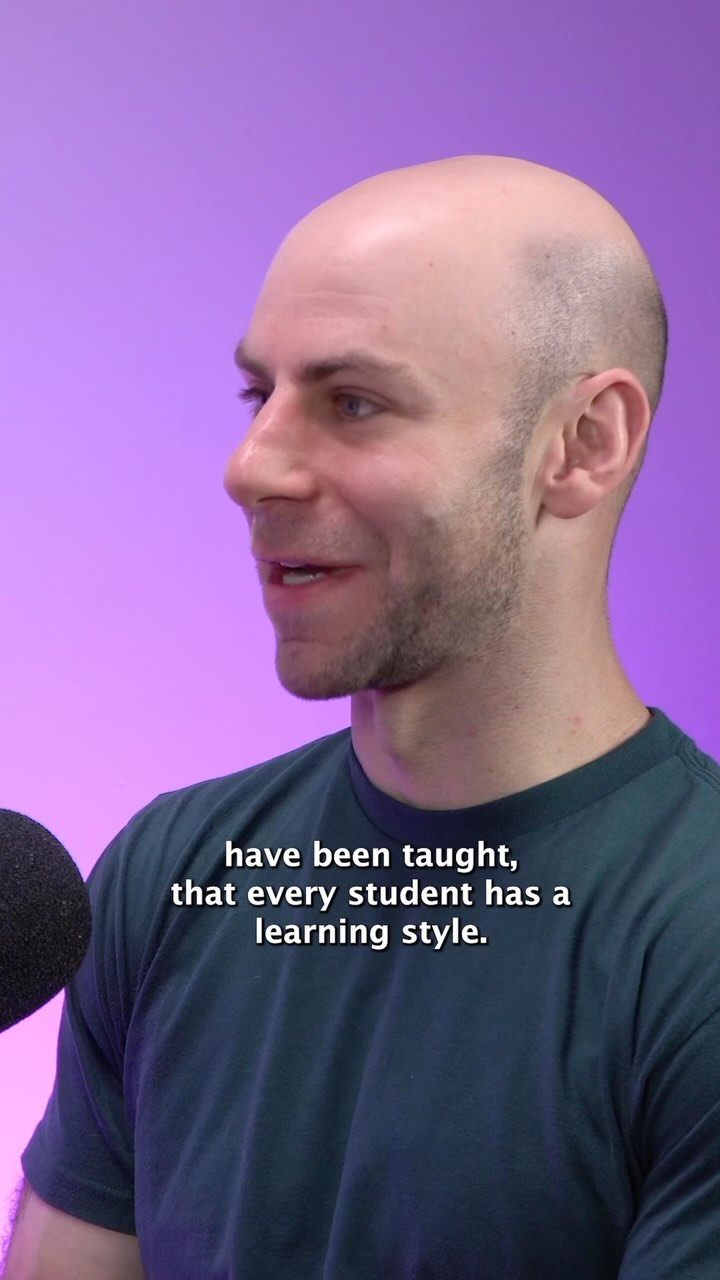
hookA man speaks confidently into a microphone on a bright purple background, instantly catching your attention with a surprising fact about learning.
Bald man profile. A bald man wearing a green shirt looks to the side near a black microphone.
Bright background. The background is a vibrant purple color with clean lighting.
Clear text. White captions appear on screen in simple, easy-to-read sentences.
Broad topic. Everyone who has tried learning a skill or subject can relate to this topic.
retainThe simple single shot and surprising science keep viewers watching to see how learning actually works.
Surprising truth. Research shows that you do not learn better just because you like a certain style.
One long shot. The video is 1 unbroken take, no hard cuts, 30.4 seconds long.
Essential setup. A simple microphone setup is all that is used to deliver the message clearly.
Easy lesson. The speaker explains the concept step by step using everyday words.
Perfect length. The 30.4 second time matches the short lesson without dragging out the point.
rewardViewers learn that pushing through difficult ways of learning helps them grow faster.
Taught something. Viewers learn that learning styles are actually a myth according to research.
Feeling motivated. Viewers feel inspired to step out of their comfort zone when studying or learning.
Useful reminder. Viewers get a helpful reminder not to limit themselves to one way of learning.
adam grantlearning styleseducation mythhow to learnstudy tipspsychologyteachinglearning styles mythstudy adviceself improvementpodcast clipspeakingscience of learning
Don’t let preconceived notions about your learning style hold you back. For a review of the science, see ch1 of Hidden Potential From my discussion on the @lastneanderthals podcast
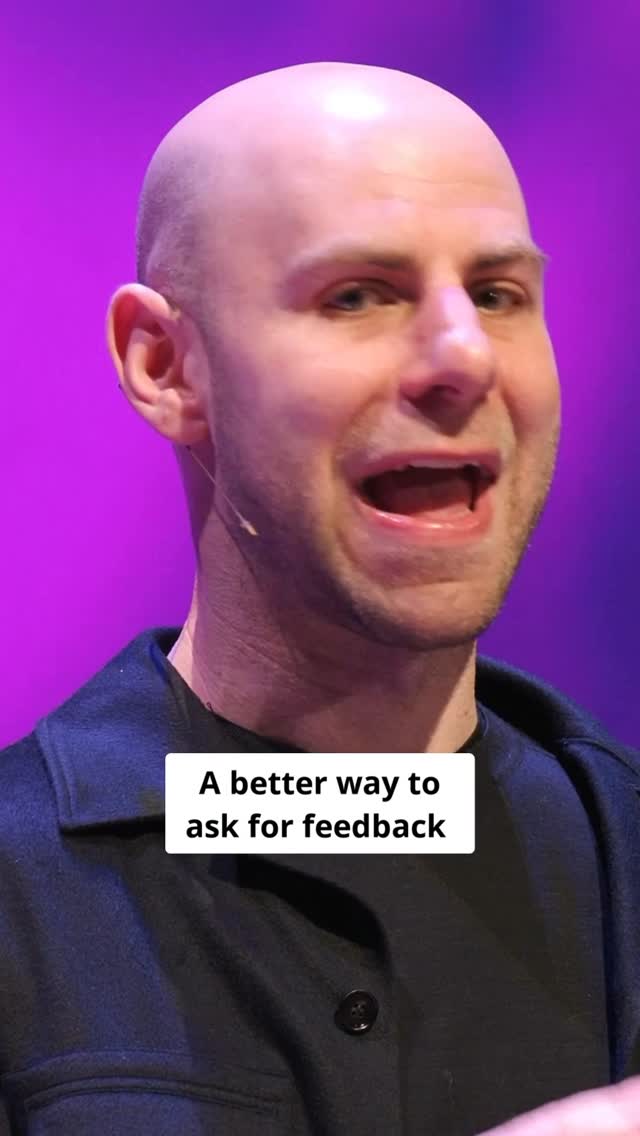
When people give tough feedback, it’s easy to get defensive. How do you stay open? @jennifer.garner and I discussed my favorite approach: instead of defending your past performance, focus on demonstrating your future potential
Instead of seeking feedback, my favorite question to ask is “What’s the one thing I can do better?” Video from my @intelligencesquared event. For an overview of the evidence, see ch2 of Hidden Potential
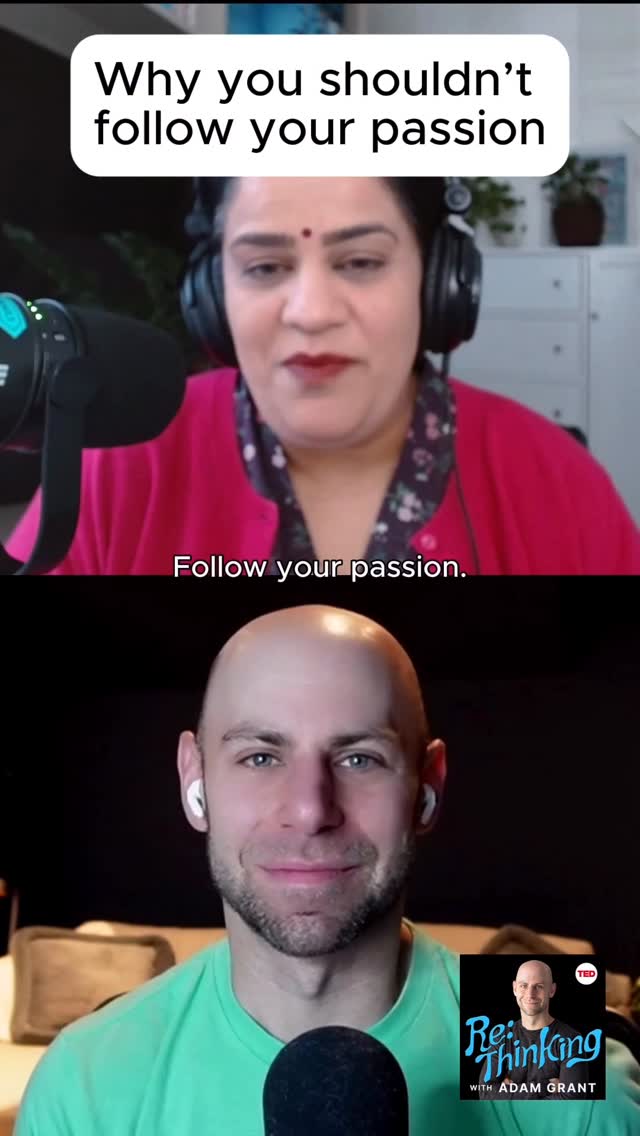
Comedian Zarna Garg argues against following your passion for career success on Adam Grant's podcast.
1.8Mviews
47Klikes
510comments
15Kshares
5.9Ksaves
2.8Mfollowers
30slong
2.6%liked
hookA bold headline about career advice makes viewers stop to hear a fresh perspective.
Bold visual text. A large white title at the top asks why you should not follow your passion.
Split screen layout. Two people appear in video call frames with podcast microphones.
Expressive speakers. A woman in pink speaks with energy while a man in green smiles.
Clear audio. Clear voices ask about the worst career advice ever.
Broad topic. Almost everyone thinks about career advice, so the message fits a wide audience.
retainHumorous arguments and relatable advice keep viewers engaged until the final sentence.
Surprising perspective. The speaker argues that passion should stay a hobby rather than a job.
Funny delivery. The comedian makes jokes about monetizing misery and making jokes freely.
Single unbroken take. The video stays in one unbroken take for 29.5 seconds without edits.
Simple setup. The podcast split screen keeps the focus entirely on the conversation.
Clear story arc. The talk moves from a simple question to funny examples and a clear answer.
Ideal length. The short 29.5 second run time keeps the punchline quick and light.
rewardViewers gain a practical laugh about career pressure and feel relieved about keeping hobbies separate from work.
Funny realization. Viewers laugh at the blunt idea of keeping work and passion separate.
Relief from pressure. People feel better about not turning every hobby into a full career.
Useful perspective. Listeners get a sensible view on doing work the world needs.
adam grantzarna gargcareer advicefollow your passionpodcast interviewfunny advicerethinkingjob tipshumorwork life balancepodcast clipcareer guidancelife lesson
@zarnagarg makes a compelling and hilarious case against following your passion
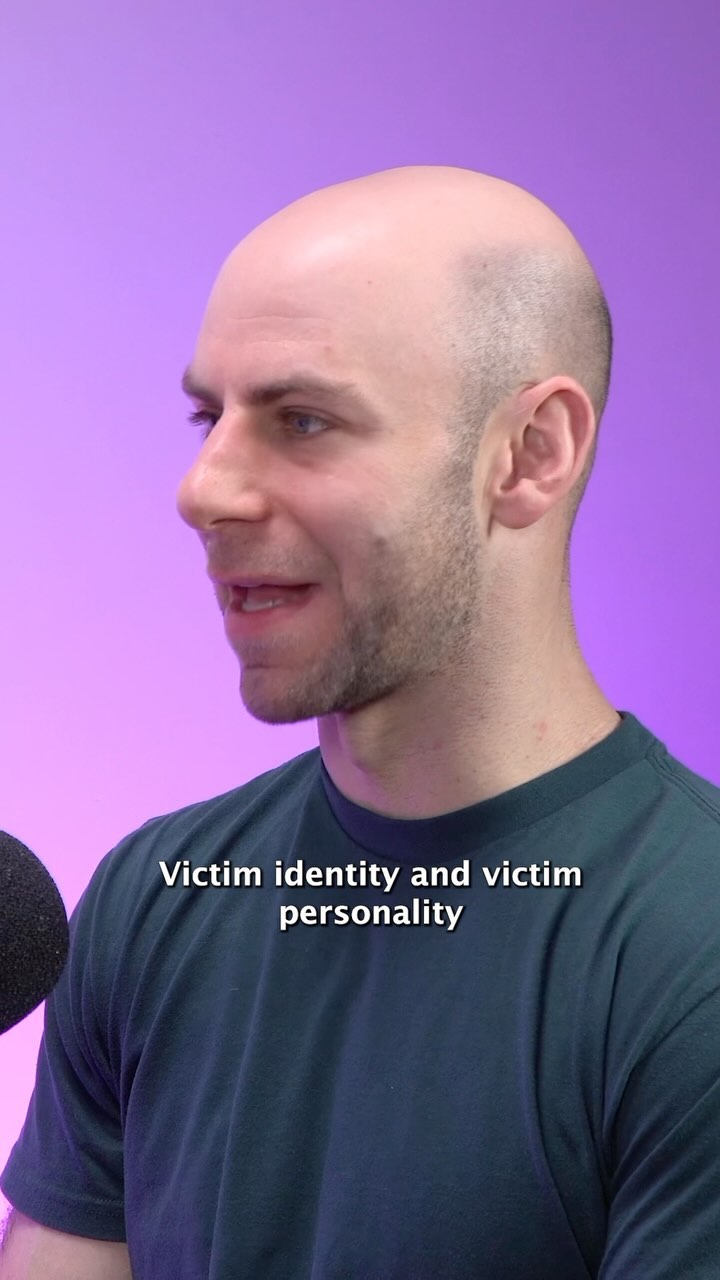
A speaker explains why some people always act like victims to get sympathy and control others.
1.8Mviews
63Klikes
762comments
0shares
0saves
2.8Mfollowers
42slong
3.5%liked
hookThe sharp purple background and bold text about victim mindsets grab attention right away.
Speaker look. A bald man wearing a dark green shirt looks slightly away from the camera.
Bright room. A vivid purple backdrop makes the person stand out clearly.
Clear voice. The spoken voice sounds crisp with no background music playing.
Bold text. Large white text with a black outline displays the words being spoken at the bottom.
Broad appeal. Anyone who deals with difficult people in daily life will care about this subject.
retainPeople keep watching to hear the psychology behind why some individuals always complain.
Surprising idea. Selfish people may pretend to be victims just to gain support and power.
Talking head format. The main point is spoken directly to the camera rather than shown.
Calm delivery. The speaker talks in a thoughtful and clear manner without getting angry.
Unbroken video. The video is 41.7 seconds long with 1 unbroken take and zero cuts.
Microphone prop. A black studio microphone sits near the speaker to give a podcast feel.
Easy structure. The explanation flows logically from the problem to the psychological reason.
Good duration. The short time fits the single central thought without dragging.
rewardViewers learn how to spot people who use fake victimhood to manipulate others.
Taught a lesson. The viewer understands the psychological tricks behind constant complaining.
Feeling validated. People who deal with selfish friends or coworkers feel understood.
Better awareness. The viewer knows what signs to look for in future conversations.
adam grantpsychologymental healthvictim mindsetpersonal growthself improvementrelationshipscommunicationpodcast cliphuman behaviorlife advicetalking headeducation
You probably know some people who air their grievances like every day is Festivus. It turns out that this is a strategy that selfish people often use to signal virtue without having to model it. For the evidence, see “The tendency for interpersonal victimhood” (Gabay et al) and “Signaling virtuous victimhood as indicators of dark triad personalities” (Ok et al) Full conversation on the @lastneanderthals podcast
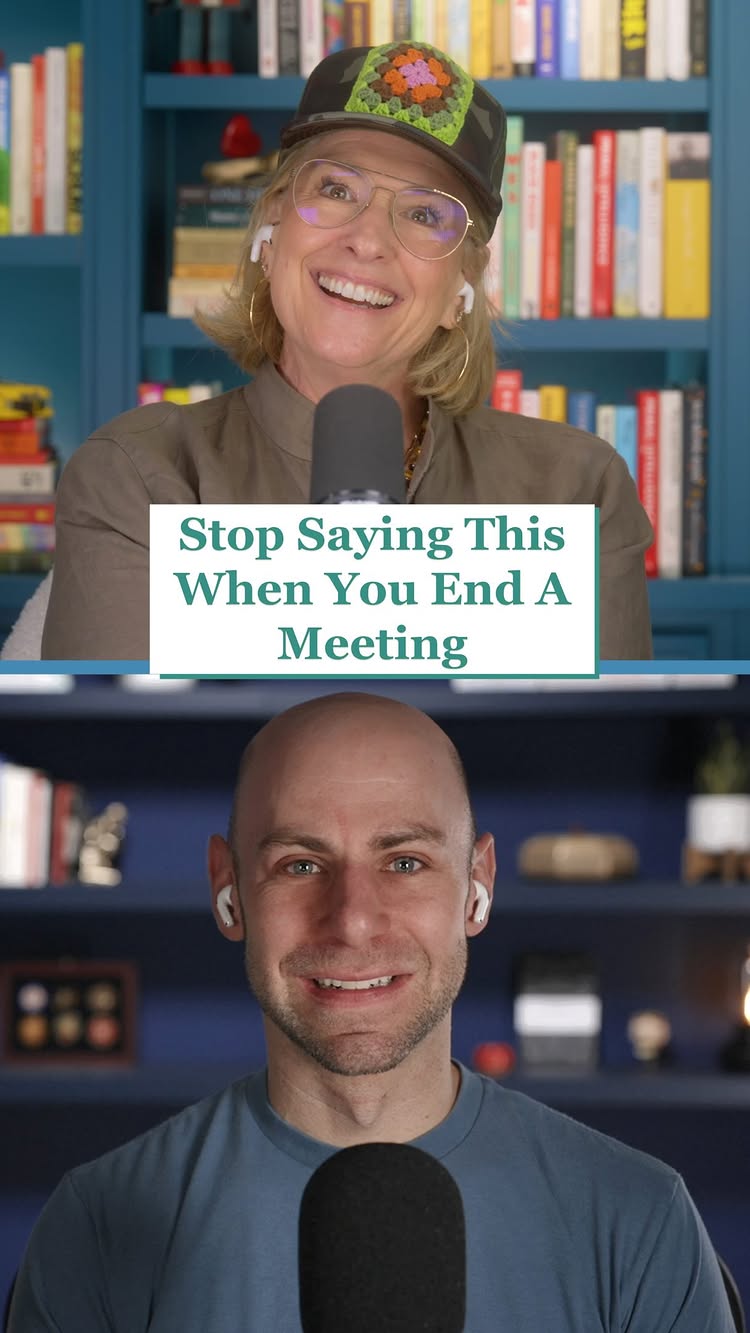
What’s your biggest pet peeve in meetings? @brenebrown and I discuss mine—as well as why she can’t watch The Office, and what she’s learned from 30 years of sobriety—this week @thecuriosityshop
A speaker explains why smart people fall for the bias of thinking they have no biases.
1.8Mviews
64Klikes
488comments
0shares
0saves
2.8Mfollowers
34slong
3.6%liked
hookThe speaker grabs attention by naming a surprising mind trap that affects smart people.
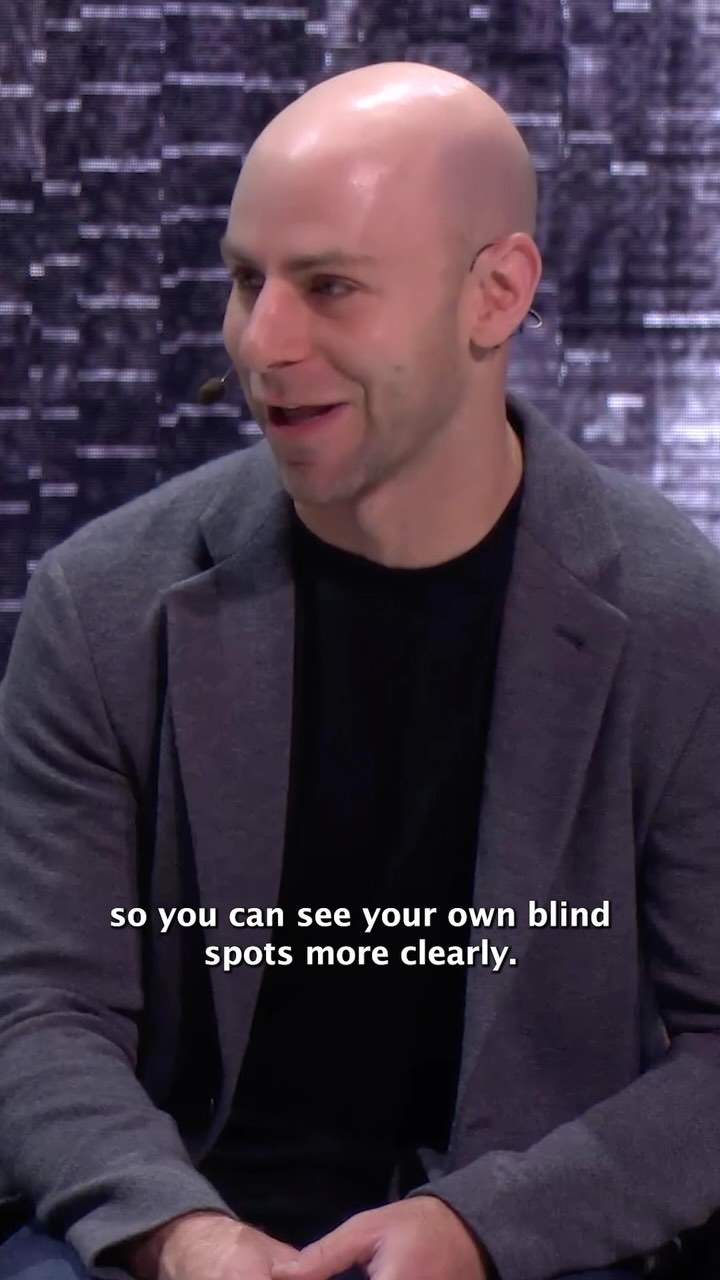
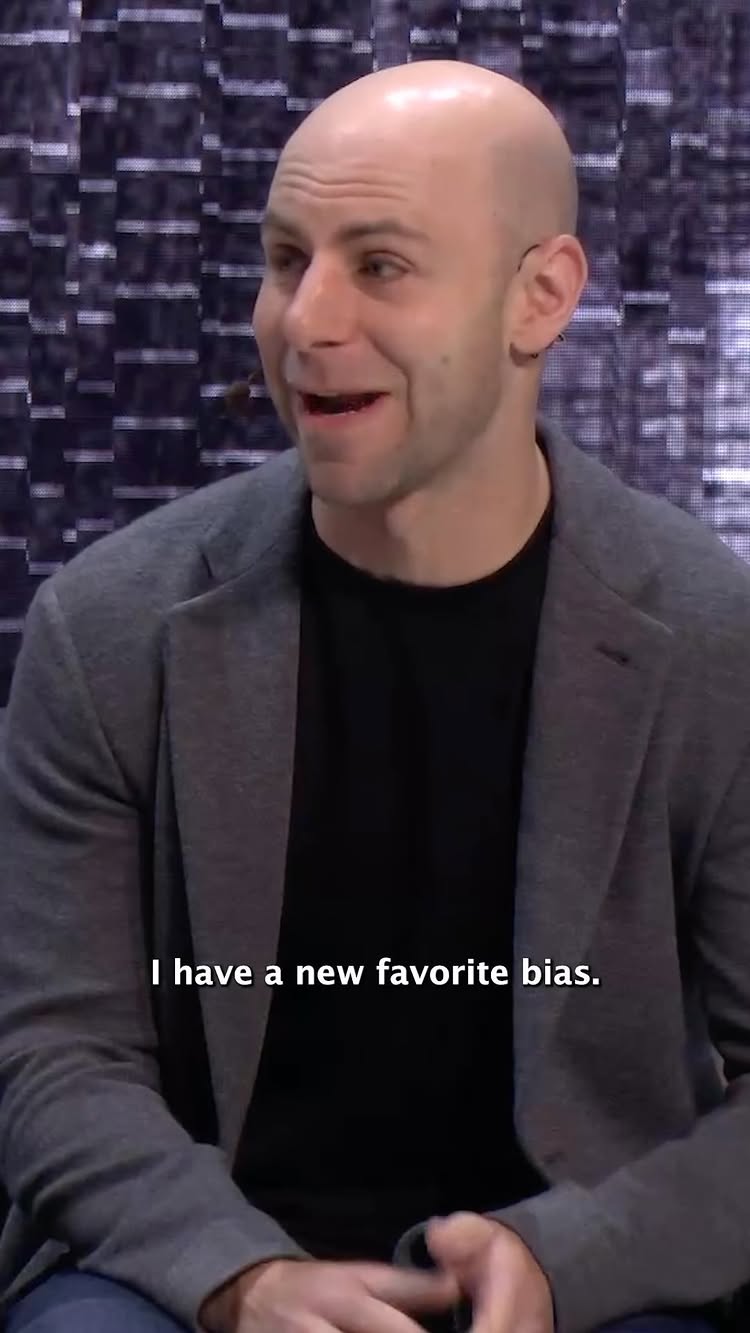
Bald speaker. A bald man wearing a gray jacket sits under soft stage lighting.
Dark stage. The backdrop has dark metallic tiles with a clean stage setting.
Clear speech. The speaker talks directly to the audience without background music.
Big subtitles. Bold white subtitles appear across the bottom of the frame.
Wide reach. Everyone wants to know if they are secretly biased or overly confident.
retainThe audience stays watching to learn how intelligence relates to personal flaws and wisdom.
Surprising truth. The speaker explains that high IQ scores actually make people more likely to fall for thinking traps.
Expressive talk. The speaker uses hand movements and clear facial expressions to keep the audience engaged.
Slow shot pacing. There are 3 shots in 33.8 seconds, changing about every 11.3 seconds with cuts at 4.4 seconds and 6.5 seconds.
Minimal setup. The video features a speaker on chairs on stage, but the talk itself is what matters.
Easy logic. The point moves step by step from defining the bias to explaining why smart people suffer from it.
Right timing. The 33.8 second duration fits a single clear idea without dragging.
rewardViewers walk away with a fresh view on human intelligence and humility.
Taught something. Viewers learn about the bias blind spot and how it affects smart thinkers.
More humble. People realize that high intelligence does not guarantee good judgment.
Clear thinking. Viewers see the difference between intelligence and wisdom.
adam grantpsychologymental biasblind spotthinking trapcognitive biasiq testwisdom vs intelligencestage talkpublic speakingself awarenessmind gameshuman behavior
What thinking trap worries you most? For me, it’s not confirmation bias or the Dunning-Kruger effect—it’s the bias blind spot. “Other people have flaws in their thinking, but I’m perfectly rational!” Enjoyed discussing at @brilliantmindssthlm with @joannacoles
A podcast guest explains why kids do not need big friend groups to be happy.
1.7Mviews
49Klikes
569comments
0shares
0saves
2.8Mfollowers
45slong
2.9%liked
hookThe opening line makes people rethink what kids need to feel like they belong.
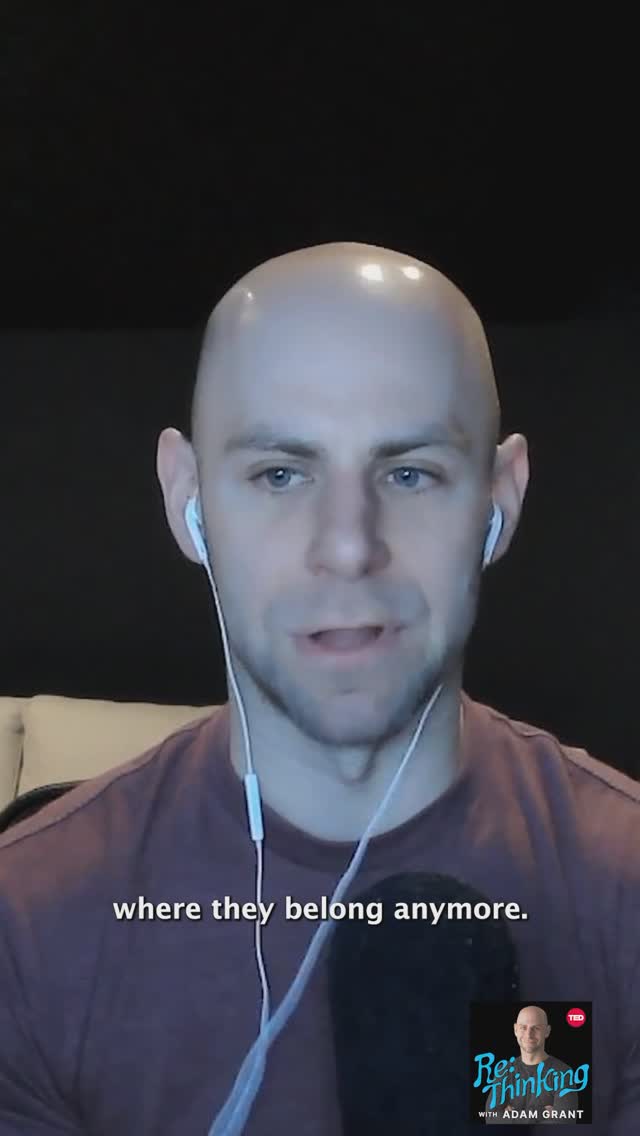
Bald host speaker. Adam Grant speaks on a video call in a dark room.
Clear visual text. White captions at the bottom read that many teens lack a group.
Broad appeal. Fitting in and making friends are topics almost everyone cares about.
retainThe expert gives clear advice that takes the pressure off parents and kids.
Useful advice. The guest explains why big groups lead to drama and why two friends are enough.
Calm speaker. The woman speaks clearly while wearing headphones in a soft lit room.
Pacing and cuts. The video has 3 shots in 44.5 seconds with a new shot about every 14.8 seconds.
Simple setup. The clean video call layout keeps the focus entirely on the message.
Easy to follow. The ideas move from the problem with big groups to simple steps for parents.
rewardViewers feel relieved to learn that having a few good friends is better than being popular.
Relief for parents. Parents stop worrying if their child only hangs out with one person.
Validation for teens. Kids with small friend groups feel like they have things figured out.
Simple tips. Viewers learn what to say to kids who feel left out.
adam grantrethinkingpodcastparentingteenagerfriendshipmental healthadvicewisdomparenting tipsteen mental healthhappinessschool friendshigh schoolmiddle school
How many friends does it take to prevent loneliness and promote well-being? Fewer than we realize, @lisa.damour reveals. Podcast link in bio